
Why Structural Steel Dominates UAE Commercial Construction
From warehouses in Al Quoz to high-rise podiums in Business Bay, structural steel remains the backbone of commercial construction across the Emirates. We break down the engineering, cost, and timeline advantages that make it the material of choice.
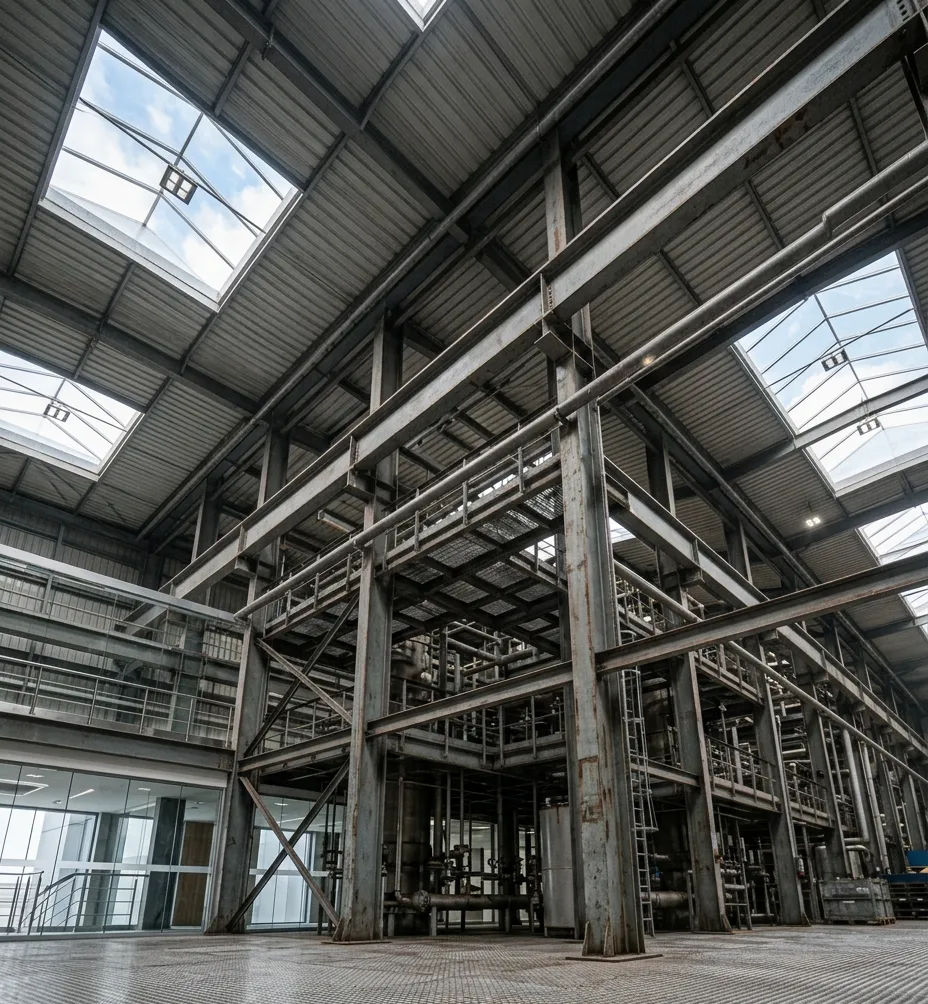
The Steel Advantage in UAE's Climate
The UAE's extreme climate — with temperatures regularly exceeding 50°C and humidity levels that can surge past 90% — demands building materials that can withstand relentless environmental stress. Structural steel stands apart in this regard. Unlike timber, which warps and degrades in humidity, or standard concrete, which can crack under extreme thermal expansion, steel maintains its structural integrity across the full spectrum of conditions found in the Gulf region.
Steel's coefficient of thermal expansion is predictable and well-documented, allowing engineers to design expansion joints and connections that accommodate movement without compromising structural performance. This predictability is critical when constructing large-span warehouses in Jebel Ali or multi-story commercial podiums in Downtown Dubai, where even millimeters of unaccounted movement can cascade into serious structural issues.
Speed of Erection: The Timeline Advantage
In the UAE's fast-paced construction market, project timelines are often measured in weeks rather than months. Structural steel offers a decisive advantage here. Because steel components are fabricated off-site in controlled workshop conditions — cut, drilled, welded, and coated before they ever reach the project site — erection is remarkably fast.
A typical steel-framed warehouse of 2,000 m² can be erected in as few as 3–4 weeks once foundations are ready. Compare this to conventional reinforced concrete, which requires formwork, rebar placement, pouring, and curing — a process that can stretch to 8–12 weeks for the same floor area. For developers facing tight handover deadlines and penalty clauses, this speed translates directly into cost savings and competitive advantage.
Cost Efficiency at Scale
While the per-tonne cost of structural steel may appear higher than concrete on paper, the total project economics often favor steel when you factor in reduced labor hours, faster occupancy, and lower foundation costs (steel structures are significantly lighter than their concrete equivalents, requiring less extensive — and less expensive — foundation work).
Additionally, steel is inherently recyclable. In a region increasingly focused on sustainability and LEED certification, the ability to reclaim and repurpose structural steel at end-of-life adds long-term value that concrete simply cannot match.
Our Approach at Covenant House
At Covenant House, we handle structural steel projects from initial engineering through to final erection. Our Sharjah-based workshop is equipped with CNC cutting, automated welding lines, and a dedicated quality control team that inspects every joint before it leaves the floor. Whether it's a single-bay warehouse or a complex multi-level steel frame, we deliver on specification, on time, and to code.