
Car Parking Shades: Engineering for the UAE Sun
With ground temperatures exceeding 65 °C in summer, properly engineered parking shades are not a luxury — they're a necessity. Here's how we design, fabricate, and install shading systems that last decades.
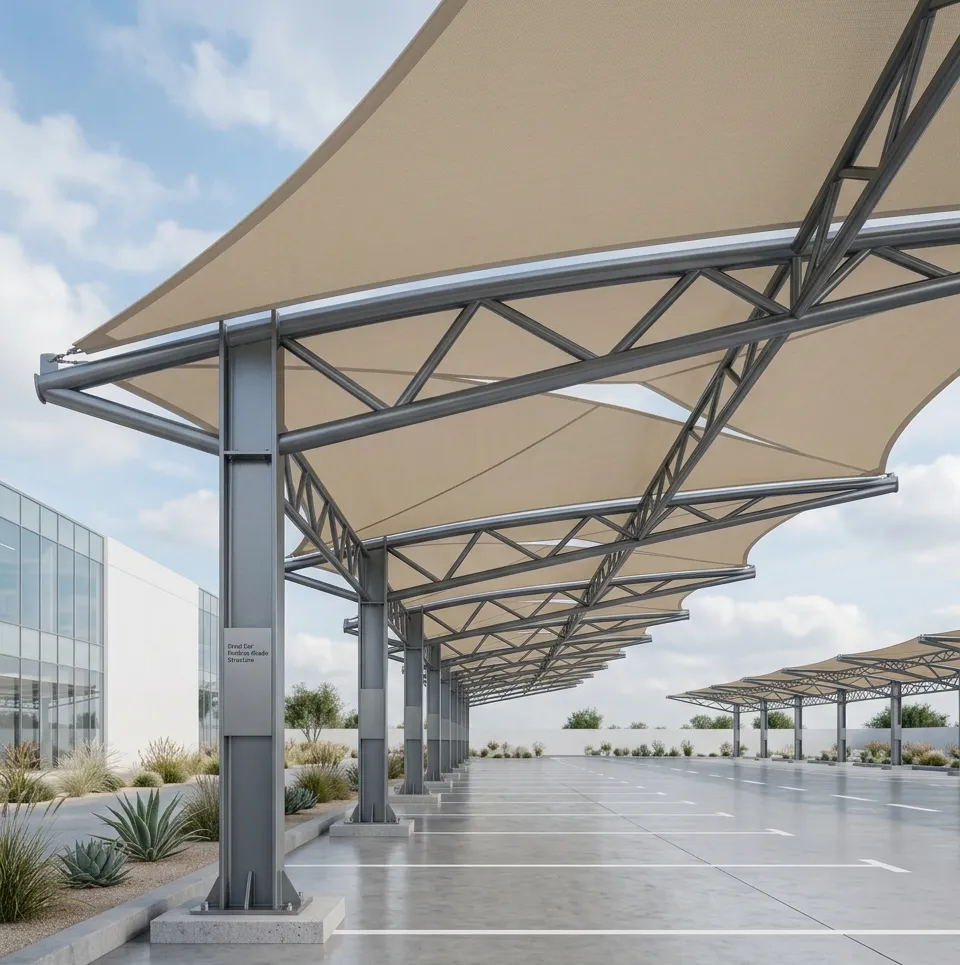
Why Parking Shades Matter in the Gulf
In the UAE, unshaded asphalt parking surfaces can reach temperatures of 65–70°C during peak summer months. Vehicles parked in direct sunlight suffer accelerated dashboard and upholstery degradation, battery failures, and in extreme cases, tire blowouts. For commercial properties, shopping centres, and residential compounds, providing effective vehicle shading is not a courtesy — it is a critical infrastructure requirement that directly impacts property value and tenant satisfaction.
Beyond vehicle protection, well-designed shade structures reduce the urban heat island effect, lower ambient temperatures in parking areas by 15–20°C, and significantly reduce the energy load on adjacent buildings by minimizing heat radiation from exposed vehicle surfaces.
Material Selection: Steel Frames and HDPE Fabric
The structural framework of a durable parking shade begins with hot-dip galvanized mild steel or, for coastal installations, marine-grade stainless steel. Galvanization provides a zinc barrier that prevents corrosion even in the salt-laden air common to coastal cities like Dubai and Abu Dhabi.
For the shade membrane itself, High-Density Polyethylene (HDPE) knitted fabric remains the industry standard. HDPE offers UV blocking rates of 90–98%, excellent air permeability (which prevents wind-loading issues that damage rigid shade materials), and a service life of 10–15 years before replacement. Color selection also matters — darker fabrics block more UV but absorb more heat, while lighter colors reflect heat but may offer slightly lower UV protection.
Engineering for Wind Loads
The UAE experiences shamal winds that can reach sustained speeds of 50–60 km/h, with gusts exceeding 80 km/h. Shade structures must be engineered to withstand these forces without uplift or structural failure. This means properly sized steel columns (typically 150mm × 150mm or larger hollow sections), adequately deep foundation pads (minimum 1.5m depth), and tensioned fabric connections that allow controlled deflection under load rather than rigid resistance.
At Covenant House, every shade structure undergoes wind-load analysis based on the specific site conditions and the relevant ASCE 7 or BS EN 1991 standards, ensuring full compliance with local municipality requirements.
Installation and Maintenance
Professional installation is critical. Columns must be plumbed to within 2mm tolerance, fabric must be tensioned to manufacturer specifications to prevent pooling and sagging, and all bolted connections must be torqued to standard. Post-installation, annual inspections of fabric tension, steel corrosion, and foundation settlement ensure the structure continues to perform as designed. We provide full maintenance packages alongside our installations to guarantee long-term performance.